


Ningbo Doto Electric Co., Ltd.

Ningbo Doto Electric Co., Ltd.
Among all the parameters on an AC contactor datasheet, the coil voltage is the one that decides whether the product will work in your control circuit at all. It is also the single most frequent cause of "defective" returns that turn out to be specification mismatches.
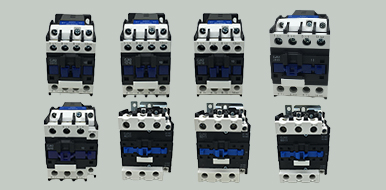
The contactor has two separate electrical sides. The main contacts carry the motor or load current and are selected by rated current — for example, the CJX2-1210 is rated 12 A (AC-3). The coil, however, is the control side, and it must match the voltage of your control circuit: 24 V, 110 V, 220 V or 380 V AC in the CJX2 series. A 220 V coil connected to a 380 V control line will overheat; a 380 V coil on a 220 V line will chatter and fail to pick up.
For export buyers there are two extra points worth checking. First, frequency: 50 Hz and 60 Hz coils behave slightly differently, so confirm your market's supply frequency when ordering. Second, naming conventions differ by region — what one market calls a "1210" may correspond to a different frame elsewhere, which is why we always ask for the rated current and coil voltage rather than the model number alone.
A simple rule for your inquiry: give us three items — load type, motor power or full-load current, and control circuit voltage. With those three facts, the correct CJX2 frame and coil can be confirmed in minutes, and you avoid the most common ordering error in the industry.
Send us your inquiry — quotation and reply within 24 hours.
Professional manufacturer of AC contactors, circuit breakers, capacitors, hour meters and counters. Factory-direct, CE & ROHS certified, exporting worldwide.
 Search
 WeChat
 Top